When homeowners discover mold in their property, one of the first questions is usually about…
Top Causes of Broken Pipes and How to Prevent Costly Repairs
No one is ever really prepared to deal with burst pipes. In less than 10 minutes, your home can be flooded with water that can ruin floors, walls, and put your entire structure at risk. If you are able to learn the most common causes of broken pipes and take the right steps, you may be able to prevent the need to call a broken water pipe repair service.
Most pipe failures can be traced back to a specific identifiable causes. Most pipe failures don’t happen all of a sudden, but instead happen as a result of identified causes, and the failures build up over time. Identifying these causes early can be the difference in saving a lot of money, and even in saving your home from serious and long-term, damage.
Quick Response Restoration is focused on helping you learn these potential causes, and assist you in avoiding the destructive outcomes that often result from a broken pipe repair.
Why Broken Pipes Are More Common Than You Think
Most homeowners think that broken pipes are uncommon. The truth is that broken pipes are one of the most common plumbing emergencies. Broken pipes can occur due to aging infrastructure, environmental changes and just normal wear and tear. Additionally, while some broken pipes are unavoidable, some are preventable by being aware of the problem and performing maintenance regularly.
In the following paragraphs, we will take a closer look at the most common causes of broken pipes and how to protect your home from them.
1. Freezing Temperatures and Ice Expansion
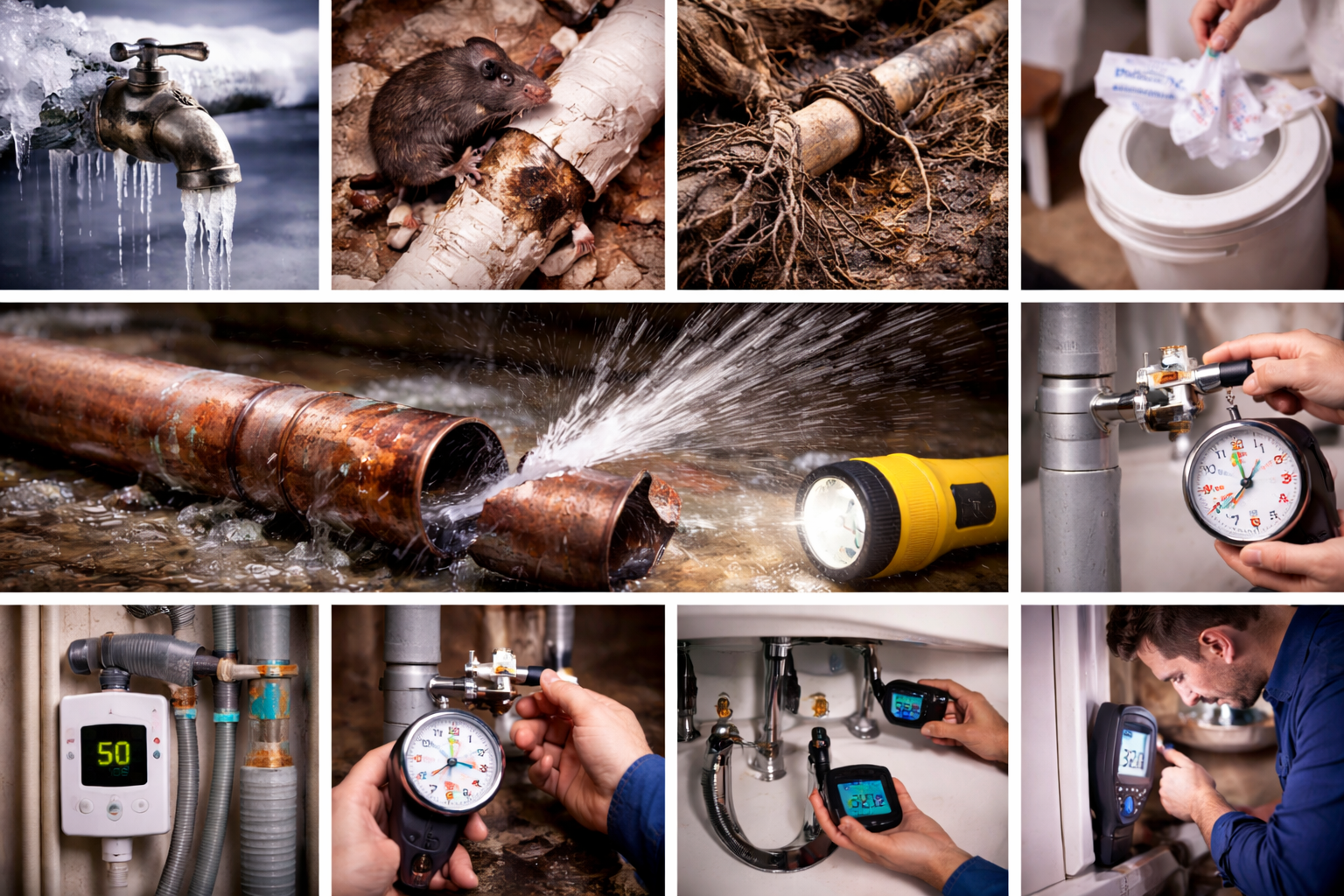
One of the leading causes of pipe failure is freezing weather conditions. When water freezes, it expands and, depending on how contained the water is, creates quite a bit of pressure, resulting in the pipe cracking and breaking.
This most likely happens in areas of the home where and when pipes are left uninsulated and are thus exposed to arctic air, like the the house’s crawl space, basement, and even the outermost walls of the house. The effect of even the most insignificant freezing event can lead to a home’s pipe system having to undergo extensive and costly repairs.
How can it be prevented?
- Insulate all obvious and not-so-obvious pipes, particularly in areas that are not heated.
- Make sure heat is not turned off in the home, no matter how much you think you will be saving. The house must be kept at a reasonable and consistent house temperature to avoid freezing pipes.
- During extreme, sub-zero cold, turn on the faucets and allow them to drip. The water movement will reduce freezing and the attached pipes will have less chance to be damaged from freezing water and created pressure from the freezing water.
By taking and following every aforementioned suggestion, you are likely to save yourself from having to call the repair people to fix broken pipes in the near and distant future.
2. Aging Pipes and Corrosion
It is no secret that pipes are bound to age and deteriorate eventually. In older homes, plumbing may even still consist of galvanized steel, a material that is especially prone to corrosion. As a pipe’s internal walls become corroded and weakened, even a minor pressure change within the pipe could result in a leak or an even bigger pipe rupture.
Tell-tale signs of advanced age and corrosion of plumbing pipes are discolored water, low or reduced water pressure, and visible rust on plumbing pipes that may be exposed above the sink or in a basement.
What can be done to control the deterioration of plumbing pipes?
- Regular plumbing inspections.
- Replacing old piping materials with new, updated, and modern materials, such as new copper pipes or new PEX materials.
- Attending to minor plumbing leaks immediately, before they turn into serious issues.
People who are homeowners and have older homes should be more careful, as old, deteriorating plumbing systems contribute to many of the broken water pipes repair Albany County cases that restoration workers and specialists have to deal with.
3. High Water Pressure
While high water pressure can feel great in the shower, it can be damaging to your plumbing system. High water pressure can cause your pipes, joints, and fixtures to crack and break.
Almost all residential plumbing systems are made to handle water at moderate levels. Water pressure over these levels can shorten the lifespan of your pipes.
How to prevent it:
- Water pressure adjusters
- Testing water pressure regularly
- Keep water pressure at the recommended amount (40-60 psi)
Water pressure also helps to reduce the amount of times you will need to repair broken pipes.
4. Tree Root Intrusion
Naturally, tree roots look for moisture in the ground, making them an attractive target for invasive roots and pipes. Tree roots can exploit small weaknesses in the pipe and grow inside, with devastating impacts such as clogging and causing structural integrity issues.
This occurs more frequently in old water and sewer lines.
What can be done:
- Don’t plant trees near buried plumbing lines
- Have regular inspections done on your sewer system to avoid tree root invasions
- Use root barriers if necessary to protect your plumbing lines.
Ignoring this issue can lead to serious and costly water pipe repair.
5. Poor Installation or Low-Quality Materials
Every plumbing system is different. Pipes that are installed poorly or are made from cheap materials will fail sooner.
Pipes can loosen, and seals can break, causing leaks and eventual pipe bursts.
What can be done?
- Do plumbing work with licensed and trained professionals.
- Use materials that are of better quality, and up to standards.
- New installations can be inspected to be sure of quality work.
A majority of the emergency calls that Quick Response Restoration receives are due to installation preventable with better planning.
6. Clogs and Blockages
Your pipes can also become damaged by built up disgust and hindered flow. The clogged drains can build up pressure, which cracks your pipes.
Your pipes can become damaged by built up disgust and hindered flow. The clogged drains can build up pressure, which cracks your pipes.
A foreign object that has been flushed down the drain, as well as the formation of grease, hair, soap, and other items, are the causes of drain obstructions.
What should you do to prevent this?
- Do Not Pour Grease and Oil Down The Drain
- Use drain covers and routine drain cleaning
A Flow blocked by a clog is one of the best ways to prevent the need for an invasive and potentially costly broken pipe restoration.
7. Ground Movement and Shifting Soil
Changes in the weather, soil erosion, or even construction, can naturally move the ground. Movement of the ground can stress the underground pipes and result in bending, cracking, or even disconnection of the pipes.
Homes built on unstable soil and with higher soil temperature fluctuations are the most vulnerable.
Prevention Methods:
- Regularly observe signs of soil shifting on your property
- Properly drain the soil around your house
- Resolve foundation concerns quickly
In soil movement affected areas, the environmental reason affecting water pipes repair Albany County.
8. Lack of Regular Maintenance
Pipe failure has many causes, but one of them is poor attention. Problems such as minor corrosion, small leaks, and early warning signs all go ignored until they become major problems.
Routine maintenance can identify minor problems, which helps them avoid the major problems they could become.
How to prevent it:
- Schedule plumbing inspections annually
- Look for leaks under sinks and on fixtures
- Look for unexpected increases on your water bill
Your plumbing system will experience fewer problems if you maintain it and keep up with its repairs. You’ll also avoid the emergency repairs needed from broken water pipes.
What Happens When A Pipe Burts
What happens after preventive measures fail? Here’s a quick overview of what one should do after a pipe bursts:
- Shut off the water supply to the whole house
- If water is running on the floor, it is advisable to vacuum the water. You can do it with a few towels, but it will take time. If there is a water restoration company nearby, it’s best to contact them to do the vacuuming (water damage restoration is part of their job). If there is a pool with stagnant water, the restoration company will do it.
- If it is safe, cut off power to the areas that are affected by the water.
- Call a water restoration company.
Restoration companies are likely to take a huge part to vacuum the water and conduct the necessary water damage repairs. This will save you a lot of effort.
Choosing the Right Help When You Need It
When a pipe bursts, you need professional help. Water damage spreads quickly to flooring, walls, and even your home’s structure.
That’s why Quick Response Restoration is a great resource for homeowners. They have the know-how to handle urgent situations and restore damaged property, so their team devises successful strategies for the current problem. Quick Response Restoration offers peace of mind to homeowners for issues ranging from small leaks to major pipe bursts.
Final Thoughts
The broken pipes that have brought you so much grief are not just plumbing problems: they affect your safety and can have serious financial consequences. Costly repairing can be avoided by learning the most common reasons for pipe problems and taking preventative measures.
The overall health of your plumbing system can be improved with preventative measures, regular checkups, and timely maintenance. When damage does occur, knowing who to call for quick and trustworthy broken pipe repair can really help.
Peace of mind and emergency restoration services are provided by Quick Response Restoration to both homeowners and business owners. Quick Response Restoration can help you avoid the stress and financial burden of severe broken water pipe repairs in Albany County.

Robert Serafini serves as Quick Response Restoration’s cornerstone of Experience, Expertise, Authority, and Trust (EEAT). A dedicated member of the Quick Response team since 1998, Robert brings decades of hands-on restoration and insurance industry knowledge to every project. Prior to joining QR, he worked as an independent insurance adjuster, giving him a deep understanding of claims processes, policy interpretation, and customer advocacy.
Robert holds multiple IICRC certifications for fire, water, mold and has successfully managed numerous multi-million-dollar restoration projects, including large-loss and complex commercial assignments. His portfolio also extends internationally, where he has contributed to remediation efforts abroad.
Deeply rooted in the Capital District community, Robert is known for his generosity and civic involvement. He actively hosts and supports charity events benefiting local hospitals, schools, first responders, veterans, Catholic organizations, pet adoption, and local Chambers of Commerce. He is also an engaged member of several professional associations: Saratoga County Chamber, Adirondack Regional Chamber, NYS SFA Chapter, GCAR, ENYSHE and BOMA continuing to elevate industry standards and strengthen community ties.
Related Posts