When homeowners discover mold in their property, one of the first questions is usually about…
How to Safely Thaw Frozen Pipes Without Causing Damage
Winter can be beautiful—until it starts causing problems inside your home. If you’ve ever turned on a faucet during a freezing morning and nothing came out, you know that sinking feeling. Frozen pipes are more than just an inconvenience—they can quickly turn into a costly emergency.
Many homeowners searching for frozen pipe repair services are already dealing with damage that could have been avoided with the right approach. The good news? If you act early and carefully, you can safely thaw frozen pipes and prevent a burst.
Let’s walk through exactly what’s happening inside your pipes, how to fix it safely, and when it’s time to call in professionals like Quick Response Restoration.
Why Do Pipes Freeze in the First Place?
Pipes don’t freeze randomly—it usually comes down to exposure and temperature.
When outdoor temperatures drop below freezing, water inside pipes—especially those in uninsulated areas—can solidify. This often happens in:
- Basements and crawl spaces
- Attics
- Exterior walls
- Garages
- Under kitchen or bathroom sinks near outer walls
As water freezes, it expands. That expansion puts pressure on the pipe walls. Eventually, something has to give—and that’s when pipes crack or burst.
Why Frozen Pipes Are Dangerous
It’s not just about losing water flow. The real danger comes when:
- Ice blocks the water pressure behind it
- The pipe weakens under stress
- It bursts suddenly once thawing begins
A single burst pipe can release gallons of water within minutes, leading to serious structural damage, mold growth, and expensive repairs.
Early Warning Signs of Frozen Pipes
Catching the issue early can save you a lot of trouble. Look out for:
- Little or no water coming from faucets
- Frost visible on exposed pipes
- Unusual odors from drains (caused by blocked pipes)
- Bulging sections in pipes
- Strange clanking or banging sounds
If you notice any of these, it’s time to act—carefully.
How to Safely Thaw Frozen Pipes (Step-by-Step)
Before you grab a tool or apply heat, slow down. Rushing this process is how pipes end up bursting.
Step 1: Locate the Frozen Section
Start by identifying which pipe is frozen. Check areas most exposed to cold. If multiple faucets aren’t working, the issue may be deeper in your plumbing system.
Step 2: Turn On the Faucet
Open the faucet connected to the frozen pipe.
This does two important things:
- It relieves pressure inside the pipe
- It allows melted water to flow out
Even a slow drip helps reduce the risk of bursting.
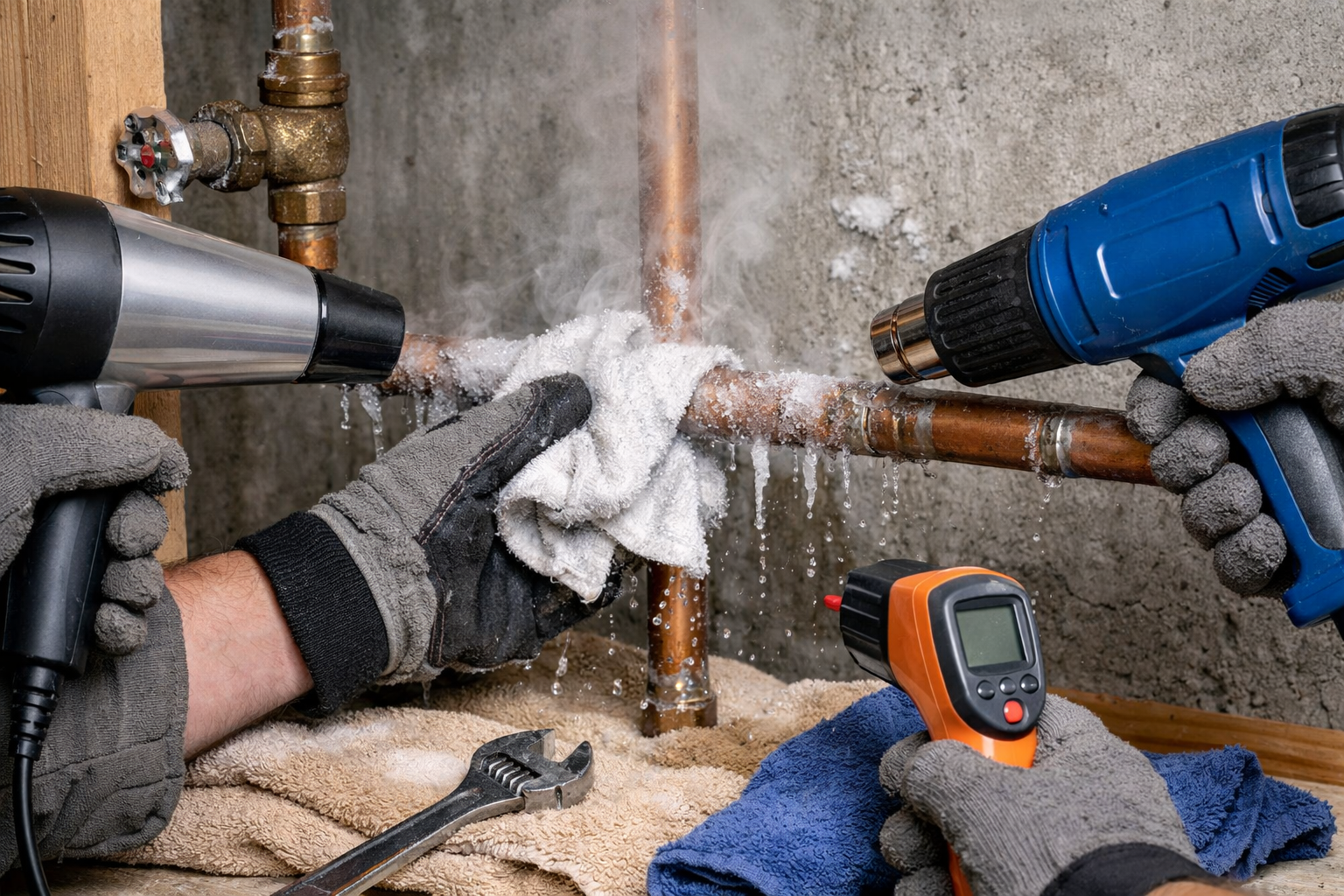
Step 3: Apply Gentle Heat
This is where patience matters most. Use safe, controlled heat sources like:
- A hair dryer
- Heating pads or electric heat tape
- Warm towels wrapped around the pipe
- A space heater (placed at a safe distance)
Always start heating from the faucet end and work your way back toward the frozen section.
Step 4: Keep the Heat Consistent
Don’t rush it. Sudden temperature changes can crack pipes.
Let the heat gradually melt the ice. This process may take time, especially if the freeze is deep inside the wall.
Step 5: Check for Leaks as It Thaws
Once water starts flowing again, inspect the pipe carefully.
Look for:
- Small cracks
- Moisture buildup
- Dripping water
Even a tiny leak can quickly turn into a bigger issue.
What NOT to Do When Thawing Pipes
This is where many homeowners make costly mistakes.
Avoid these at all costs:
- ❌ Using open flames (like blowtorches or propane heaters)
- ❌ Pouring boiling water directly on pipes
- ❌ Using high-heat devices too close to the pipe
- ❌ Ignoring strange noises or bulging pipes
- ❌ Thawing without turning on the faucet
These methods can weaken the pipe structure or cause sudden bursts.
When DIY Isn’t Enough
Sometimes, even careful thawing won’t solve the problem—or it may already be too late.
Here’s when you should stop and call professionals:
1. You Can’t Locate the Frozen Pipe
If the blockage is inside walls or underground, it’s not safe to guess.
2. The Pipe Has Already Cracked
Even a small fracture can lead to major water damage.
3. There’s No Water Flow After Thawing
This could indicate a deeper blockage or hidden damage.
4. You Notice Water Leaks or Damp Walls
That’s a sign the pipe may have burst.
5. Multiple Pipes Are Frozen
This often points to a larger systemic issue that needs expert handling.
In these situations, searching for frozen pipe repair near me is the right move—but choosing a reliable company matters just as much.
Why Professional Frozen Pipe Repair Matters
Fixing a frozen pipe isn’t just about restoring water flow—it’s about preventing long-term damage.
Professionals can:
- Identify hidden damage inside walls
- Repair or replace compromised pipes
- Prevent future freezing with proper insulation
- Address any water damage caused by leaks
For homeowners in New York, especially those dealing with harsh winters, working with experts offering frozen pipe repair services in Saratoga County ensures the job is done safely and completely.
How Quick Response Restoration Can Help
At Quick Response Restoration, frozen pipes aren’t treated as a quick fix—they’re handled as a potential emergency.
Their team understands how fast a frozen pipe can turn into a burst pipe situation. Whether it’s a minor freeze or a major water damage issue, they focus on:
- Fast response times
- Thorough inspection
- Safe repair methods
- Preventing future problems
Homeowners across Saratoga County trust their experience when winter plumbing issues strike unexpectedly.
Simple Tips to Prevent Frozen Pipes in the Future
Once you’ve dealt with frozen pipes, prevention becomes a priority.
Here are a few practical steps that make a big difference:
- Keep indoor temperatures consistent (even at night)
- Let faucets drip during extreme cold
- Insulate exposed pipes
- Seal gaps and cracks near walls or foundations
- Open cabinet doors to allow warm air circulation
- Disconnect outdoor hoses before winter
These small habits can save you from searching for emergency repairs later.
Final Thoughts
Dealing with frozen pipes is stressful—but how you respond makes all the difference. Acting quickly, using safe thawing methods, and knowing your limits can help you avoid serious damage.
If you ever find yourself unsure or dealing with a situation that feels beyond DIY, don’t take risks. Professional frozen pipe repair service exists for a reason—to protect your home and give you peace of mind.
Quick Response Restoration is there when it matters most, helping homeowners in Saratoga County handle frozen pipes safely and effectively—before they turn into something worse.
Robert Serafini serves as Quick Response Restoration’s cornerstone of Experience, Expertise, Authority, and Trust (EEAT). A dedicated member of the Quick Response team since 1998, Robert brings decades of hands-on restoration and insurance industry knowledge to every project. Prior to joining QR, he worked as an independent insurance adjuster, giving him a deep understanding of claims processes, policy interpretation, and customer advocacy.
Robert holds multiple IICRC certifications for fire, water, mold and has successfully managed numerous multi-million-dollar restoration projects, including large-loss and complex commercial assignments. His portfolio also extends internationally, where he has contributed to remediation efforts abroad.
Deeply rooted in the Capital District community, Robert is known for his generosity and civic involvement. He actively hosts and supports charity events benefiting local hospitals, schools, first responders, veterans, Catholic organizations, pet adoption, and local Chambers of Commerce. He is also an engaged member of several professional associations: Saratoga County Chamber, Adirondack Regional Chamber, NYS SFA Chapter, GCAR, ENYSHE and BOMA continuing to elevate industry standards and strengthen community ties.
Related Posts