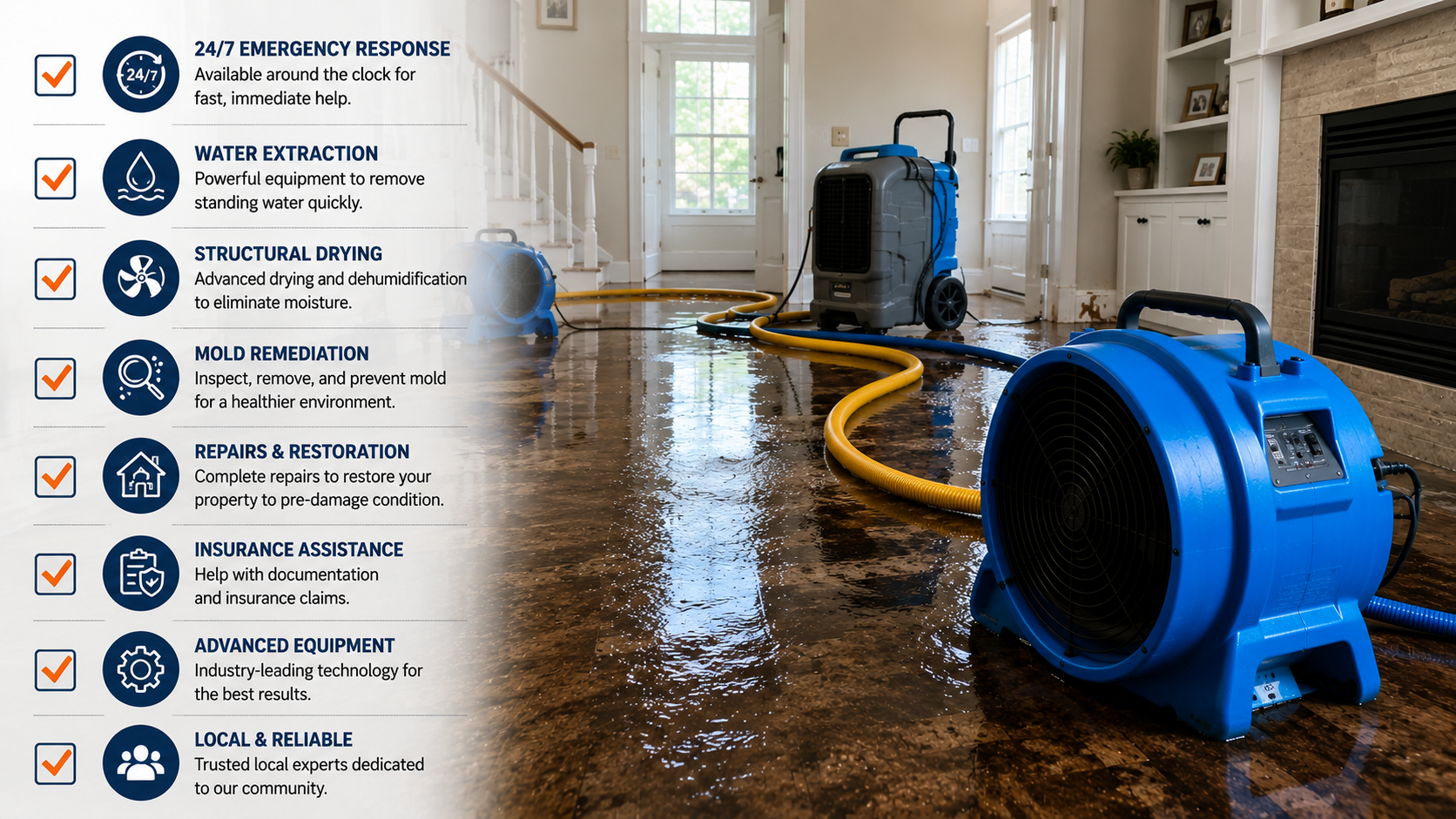
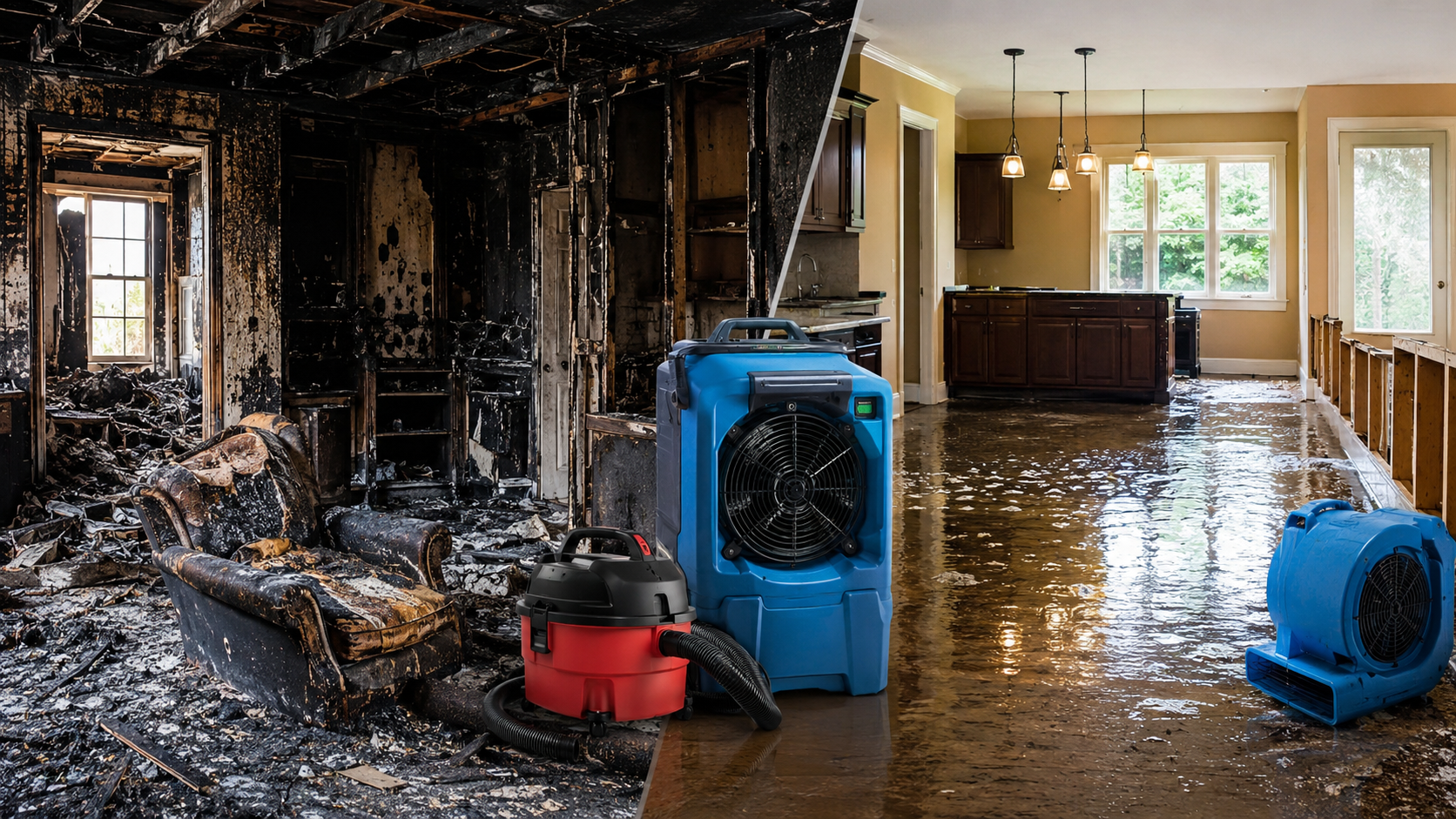
A burst pipe, leaking water heater, or suddenly damaged plumbing line can release a surprising…

Basement Flood Cleanup Tips: What to Do Before the Experts Arrive
A flooded basement is every homeowner’s nightmare. Whether caused by heavy rainfall, burst pipes, or foundation seepage, the mess can feel overwhelming—and time is critical. The longer standing water remains, the more extensive and expensive the damage can become. From structural weakening to hidden mold growth, even a few inches of water can lead to significant repairs if left unaddressed.
That’s why acting fast is key. While professional basement flood cleanup is the ultimate solution, there are several steps homeowners can take in those stressful first hours to minimize damage and stay safe. And once Quick Response Restoration’s experts arrive, their precision tools and advanced drying techniques ensure your property is completely restored and protected against long-term issues.
Here’s a practical guide on what to do immediately after discovering basement flooding—and how Quick Response Restoration steps in to bring your home back to normal.
1. Prioritize Safety Before Anything Else
Before you rush downstairs, pause and assess the situation. Basement flooding creates a variety of hazards—electrical, chemical, and structural—that can put you and your family at risk.
Here’s what to do first:
- Turn off the electricity and gas supply to the affected area. If the electrical panel is in your basement, don’t attempt to switch it off yourself—call an electrician or wait for professionals.
- Avoid standing water that could conceal sharp objects, chemicals, or sewage contamination.
- Wear protective gear such as rubber boots, gloves, and a mask before entering the space.
If there’s heavy water accumulation or possible contamination, contact Quick Response Restoration’s Emergency Response Team immediately. Our technicians arrive quickly to secure the site and begin professional water removal.
2. Stop the Source of Water If Possible
If it’s safe to do so, identify and stop the source of flooding. Common culprits include:
- A burst or leaking pipe
- Backflow from a sewer line
- Groundwater infiltration after heavy rain
- Malfunctioning sump pumps
Use these quick remedies when appropriate:
- Shut off the main water valve if a plumbing issue is responsible.
- Clear debris from floor drains or gutters to restore proper water flow.
- If a sump pump fails, unplug it, inspect the function, and reset it once the power is safely restored.
Even temporary containment can slow further damage until professionals begin full extraction. For persistent backups or multiple water sources, Quick Response Restoration’s Water Damage Restoration crew provides industrial pumping and moisture control that goes far beyond DIY efforts.
3. Remove Valuable Items and Salvage What You Can
The faster you act to remove items from floodwater, the greater your chance of saving them. Start by moving furniture, rugs, and electronics to a higher floor. Prioritize important documents, keepsakes, and irreplaceable objects that could be permanently damaged by moisture.
If the floodwater is clean (for example, from a fresh water supply line), you may be able to salvage more items after proper drying. However, if the water appears murky or smells foul, it may contain toxins or sewage—don’t touch these materials yourself.
Quick Response Restoration’s experts handle contaminated water situations safely using EPA-approved disinfectants and specialized content drying systems. Our Content Restoration Services page explains how we help homeowners recover valuables after severe water exposure.
4. Start Gentle Drying and Ventilation
Once standing water is cleared, early drying makes a big difference. Open windows and doors to allow airflow, and use fans or dehumidifiers to start removing humidity if the power is safe to use.
Remember: simple air circulation can’t replace professional drying. Moisture often hides beneath floors, behind drywall, and in insulation, where it promotes mold growth within 24–48 hours. Professionals use moisture meters and infrared imaging to detect hidden dampness precisely.
Our team at Quick Response Restoration uses commercial-grade air movers and desiccant dehumidifiers to fully dry properties, reducing future structural and mold complications. You can learn about this process on our Mold Remediation page to understand why complete drying is essential after flooding.
5. Avoid DIY Cleanup for Contaminated or Sewage Water
Greywater (from washing machines or dishwashers) and blackwater (from sewage backups) require strict sanitation procedures. Exposure to bacteria, viruses, and chemicals can cause serious health risks.
Attempting to clean these areas yourself, even with bleach or detergent, can worsen contamination and drive moisture deeper into porous materials like wood and drywall. Only trained professionals using industrial extraction, disinfection, and drying equipment can properly contain and neutralize such hazards.
At Quick Response Restoration, our certified specialists follow IICRC standards for sewage and contamination cleanup. We ensure your basement is fully disinfected, deodorized, and safe for re-entry.
6. Document Everything for Insurance
Before you move or clean anything, take clear photos and videos of the damage. Document affected areas, damaged personal belongings, and high-water marks on walls. Keep all receipts for repair or replacement expenses.
Proper documentation speeds up the insurance claim process and helps ensure fair coverage for both structural repairs and content restoration. Our Fire and Water Insurance Support process includes detailed damage reports to assist you in filing your claim accurately.
When Quick Response Restoration arrives, we coordinate directly with your insurer, providing organized reports and moisture readings so you don’t have to handle everything alone.
7. Call the Flood Cleanup Professionals Right Away
Even if your initial cleanup efforts seem effective, unseen moisture will continue to cause deterioration and mold formation. Water absorbed into foundation cracks, wooden beams, or drywall will eventually weaken the structure and produce foul odors.
Quick Response Restoration’s emergency teams respond within hours, equipped with high-powered extraction units, drying chambers, and thermal imaging tools. We don’t just remove the water—we restore indoor air quality, sanitize the property, and ensure your basement is truly dry and safe before rebuilding.
Our restoration process includes:
- Rapid water extraction and humidity control
- Sanitization of floors, walls, and furniture
- Mold and odor prevention treatment
- Full basement drying and dehumidification
- Repair or replacement of damaged structures
Once the cleanup is complete, we also offer rebuilding through our Reconstruction Services page—so you get a complete recovery solution under one roof.
Staying Ahead: Prevent Future Basement Flooding
Once your basement is restored, take preventive measures to keep flooding from happening again. Here are a few simple steps:
- Inspect foundation cracks and seal them properly.
- Service sump pumps annually and install a battery backup system.
- Keep gutters and downspouts clear to channel rainwater away.
- Install backflow valves in sewer lines to block reverse flow.
- Maintain proper grading around your home to prevent water pooling near walls.
Quick Response Restoration’s specialists can assess your home’s unique vulnerabilities and recommend tailored prevention strategies so you can stay protected year-round.
Quick Action Today Prevents Big Damage Tomorrow
A flooded basement can be stressful, but with the right first steps and dependable professional help, recovery is entirely achievable. Acting quickly minimizes both the cost and complexity of restoration and helps preserve your home’s value.
At Quick Response Restoration, we bring expertise, technology, and compassion to every emergency. Our 24/7 teams handle water extraction, drying, and mold prevention with unmatched precision. When disaster strikes, we’re not just restoring your property—we’re restoring your peace of mind.
If your basement has flooded, don’t wait. Reach out through our Contact Page or call your nearest Quick Response Restoration location for immediate assistance. Fast action today could save thousands in future repairs—and protect your home for years to come.

Robert Serafini serves as Quick Response Restoration’s cornerstone of Experience, Expertise, Authority, and Trust (EEAT). A dedicated member of the Quick Response team since 1998, Robert brings decades of hands-on restoration and insurance industry knowledge to every project. Prior to joining QR, he worked as an independent insurance adjuster, giving him a deep understanding of claims processes, policy interpretation, and customer advocacy.
Robert holds multiple IICRC certifications for fire, water, mold and has successfully managed numerous multi-million-dollar restoration projects, including large-loss and complex commercial assignments. His portfolio also extends internationally, where he has contributed to remediation efforts abroad.
Deeply rooted in the Capital District community, Robert is known for his generosity and civic involvement. He actively hosts and supports charity events benefiting local hospitals, schools, first responders, veterans, Catholic organizations, pet adoption, and local Chambers of Commerce. He is also an engaged member of several professional associations: Saratoga County Chamber, Adirondack Regional Chamber, NYS SFA Chapter, GCAR, ENYSHE and BOMA continuing to elevate industry standards and strengthen community ties.
Related Posts