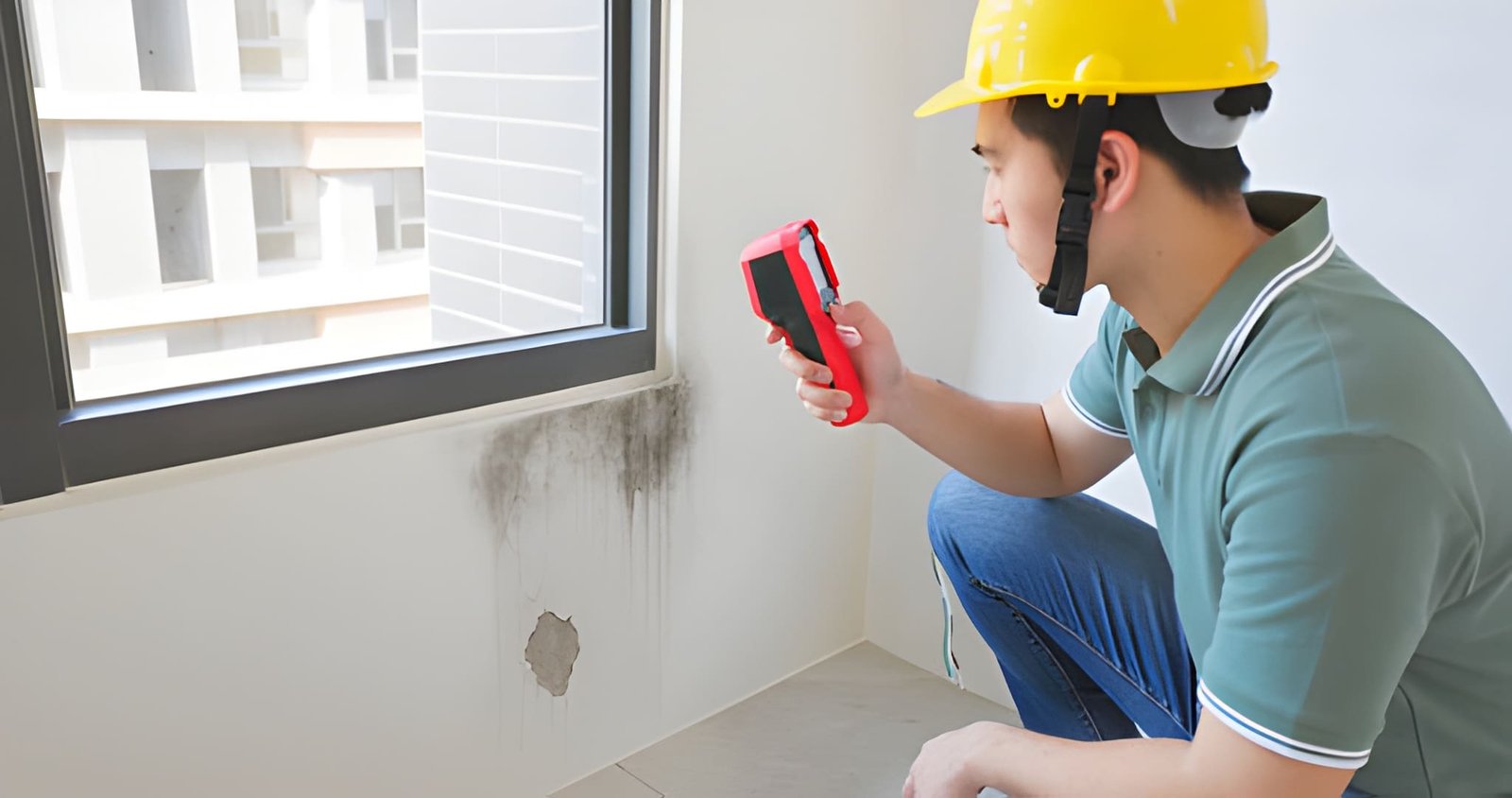
When you notice mold, a musty odor, water stains, or signs of moisture in your property, one of the first questions is whether you should arrange an inspection before dealing with the problem. Understanding mold inspection cost can help you decide whether an inspection or mold testing is actually necessary before moving forward with remediation.
A mold inspection is not always required before remediation. In some situations, visible mold and an obvious moisture source make the next steps relatively clear. In other cases, an inspection can help identify hidden moisture, determine how far a problem may extend, and provide useful information before cleanup begins.
The right choice depends on the condition of the property, the visibility of the mold, the source of moisture, and what you need to know before deciding how to proceed.
What Is a Mold Inspection?
A mold inspection is an evaluation of a property for visible mold, moisture problems, and conditions that could support mold growth.
The inspection may involve examining areas where mold is visible, checking for signs of water intrusion, identifying damp materials, looking for musty odors, and investigating areas where hidden moisture may be present.
Depending on the situation, an inspection may also involve moisture measurements or recommendations for mold testing.
The goal is to understand the potential problem and determine what action may be appropriate. An inspection is different from mold remediation because it focuses on assessment rather than the physical removal or treatment of mold.
Why Consider a Mold Inspection Before Remediation?
Mold is often connected to an underlying moisture problem. If the source of moisture is not identified and corrected, mold may continue to develop even after affected surfaces have been cleaned.
An inspection can help answer important questions such as:
- Is there actually evidence of mold or moisture?
- Where is the moisture coming from?
- Could mold be present in hidden areas?
- How extensive does the affected area appear to be?
- Is additional mold testing necessary?
- Should professional remediation be considered?
Having this information can make it easier to determine the appropriate next step rather than immediately paying for services that may not be necessary.
How Much Does Mold Inspection Cost?
Mold inspection cost varies depending on the property and the scope of the inspection. There is no universal price because properties can differ significantly in size, layout, accessibility, moisture conditions, and suspected mold growth.
Several factors can influence the cost, including the size of the property, number of areas being inspected, extent of suspected moisture damage, accessibility of affected areas, and whether additional testing is recommended.
A small, localized concern may require a relatively straightforward assessment, while a larger property with multiple moisture problems may require more time and investigation.
If testing is included or recommended, laboratory analysis and sample collection can also affect the total expense.
Rather than choosing an inspection based only on price, ask what the service includes and what questions it is intended to answer.
What Factors Affect Mold Inspection Cost?
Understanding what influences the price can make it easier to compare inspection services.
1. Property Size
A larger property generally takes more time to inspect. Multiple floors, rooms, bathrooms, utility spaces, basements, attics, or other areas can increase the scope of the assessment.
2. Extent of the Suspected Problem
A small area of visible mold may be easier to evaluate than a property with widespread staining, multiple odors, recurring mold, or a history of extensive water damage.
3. Accessibility
Some areas are easier to inspect than others. Crawl spaces, attics, wall cavities, spaces beneath flooring, and other difficult-to-access locations may require additional investigation.
4. Moisture Investigation
If there is evidence of an active leak, condensation, flooding, or another moisture source, identifying the cause may become an important part of the inspection.
5. Mold Testing
Mold testing can add to the total cost when samples need to be collected and analyzed. However, testing is not automatically necessary for every suspected mold problem.
6. Property Type
Residential homes, apartments, rental properties, commercial buildings, and larger facilities may require different inspection approaches.
7. Location
Local labor costs, demand, property conditions, and availability of qualified professionals can also influence inspection pricing.
Mold Inspection vs. Mold Testing: What Is the Difference?
Mold inspection and mold testing are often discussed together, but they serve different purposes.
A mold inspection generally involves evaluating the property for visible mold, moisture, water damage, odors, and other conditions associated with mold growth.
Mold testing involves collecting samples that are then analyzed to provide additional information about the presence or characteristics of mold or fungal particles.
Testing may involve air samples, surface samples, or other methods depending on the situation.
The important point is that testing does not replace an inspection. A laboratory result may provide information about a sample, but it does not necessarily identify the source of moisture or explain why mold is developing.
Do You Need Mold Testing Before Remediation?
Not necessarily.
If visible mold is present and the affected area and moisture source are already clear, testing may not provide much additional value before remediation.
For example, if a plumbing leak caused visible mold growth on an easily accessible section of drywall, the immediate priorities may be correcting the leak, assessing the affected material, and determining the appropriate cleanup or remediation approach.
Testing may be more useful when the situation is uncertain. A property owner may consider it when mold is suspected but not visible, when there are unexplained odors, or when additional information is needed to evaluate a suspected problem.
The decision should be based on the specific circumstances rather than assuming every mold concern requires laboratory testing.
When Should You Get a Mold Inspection?
There are several situations where an inspection may be worth considering.
1. You Notice a Persistent Musty Odor
A musty smell can sometimes indicate mold or moisture even when no visible growth can be found.
If the odor continues after cleaning or appears to come from an unknown area, an inspection may help identify possible moisture-related concerns.
2. You Have Experienced Water Damage
Flooding, plumbing leaks, roof leaks, appliance leaks, and other water-related incidents can create conditions that support mold growth.
An inspection may be useful when affected materials were not dried promptly or when you are unsure whether moisture remains.
3. Mold Keeps Returning
If mold repeatedly appears after cleaning, the underlying moisture source may not have been resolved.
An inspection can help determine whether there are ongoing moisture conditions that need to be addressed.
4. You Suspect Hidden Mold
Mold may develop behind walls, under flooring, above ceilings, inside cabinets, or in other areas that are not immediately visible.
If you have signs such as unexplained odors, staining, damp materials, or a history of water intrusion, professional evaluation may be appropriate.
5. You Are Concerned About Indoor Conditions
Persistent moisture and mold concerns can affect the overall condition of an indoor environment.
If you are unsure whether an odor, discoloration, or moisture problem is related to mold, an inspection can provide additional information.
6. You Are Buying or Selling a Property
Mold and moisture concerns can become important during a property transaction, especially when there is a history of flooding, leaks, or visible damage.
An inspection may help clarify the condition of the property before a transaction moves forward.
When You May Not Need a Mold Inspection
Not every mold situation requires a separate inspection.
If mold is clearly visible, the affected area is limited, and the source of moisture is already known, additional testing or inspection may not be necessary before addressing the problem.
For example, a visible area of mold caused by a known plumbing leak may provide enough information to determine that the leak needs to be repaired and the affected materials assessed.
However, this does not mean every visible mold problem can be handled without professional help. The size of the affected area, type of material involved, moisture conditions, and safety concerns should all be considered.
When the extent or cause is uncertain, professional evaluation can provide valuable information.
What Happens During a Mold Inspection?
The inspection process can vary depending on the property and the suspected problem.
1. Initial Assessment
The inspector may begin by asking about the property’s history, including previous leaks, flooding, plumbing problems, roof damage, odors, visible mold, or recurring moisture.
2. Visual Inspection
The property may be examined for visible mold, discoloration, water stains, damp materials, condensation, and other signs of moisture.
3. Moisture Assessment
Moisture detection equipment may be used to identify areas with elevated moisture levels.
This can be particularly useful when the source of a problem is not immediately visible.
4. Investigation of Suspected Areas
If there are indications of hidden moisture or mold, additional areas may be evaluated depending on accessibility and the circumstances.
5. Testing When Appropriate
If there is a specific reason to collect samples, mold testing may be recommended as part of the overall assessment.
6. Recommendations
The inspection may conclude with recommendations about moisture correction, additional investigation, cleaning, containment, or professional mold remediation.
What Can a Mold Inspection Tell You?
A professional inspection can provide useful information about the conditions surrounding a suspected mold problem.
It may help identify:
- Areas showing visible mold growth
- Potential sources of moisture
- Signs of water intrusion
- Areas with elevated moisture
- Conditions that could support mold growth
- Locations that may require additional investigation
- Whether testing may be appropriate
- Whether professional remediation should be considered
However, an inspection cannot always identify every hidden problem without additional investigation. Building materials, accessibility, and the location of suspected moisture can affect what can be evaluated.
Why Identifying the Moisture Source Matters
Mold remediation is more effective when the underlying moisture problem is addressed.
Common moisture sources can include plumbing leaks, roof leaks, flooding, condensation, high indoor humidity, drainage problems, appliance leaks, and water intrusion around windows or exterior walls.
If the source remains active, mold may return after cleaning or removal.
For this reason, an inspection should not focus solely on finding mold. Understanding why moisture is present is an important part of deciding what needs to happen next.
Can You Inspect for Mold Yourself?
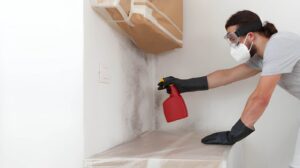
Homeowners can perform a basic visual check for obvious signs of mold and moisture.
Look for discoloration, musty odors, water stains, damp materials, condensation, peeling surfaces, and visible leaks.
However, hidden moisture can be difficult to identify without appropriate equipment. Mold may also develop in locations that cannot be easily seen.
If the problem is recurring, extensive, hidden, or associated with significant water damage, professional evaluation may be a better option.
Avoid disturbing large areas of suspected mold unnecessarily, particularly when you are unsure about the extent of the problem.
Is Mold Inspection Worth the Cost?
Whether an inspection is worth the cost depends on what you need to determine.
An inspection can be valuable when you have a persistent odor but cannot find the source, when mold keeps returning, when there has been significant water damage, or when hidden moisture is suspected.
It may be less necessary when the mold is clearly visible, the affected area is understood, and the moisture source has already been identified.
Before scheduling an inspection, consider what question you are trying to answer.
If you need to know whether hidden moisture exists, an inspection may provide useful information. If you already know exactly where the mold is and why it developed, the next step may be addressing the moisture source and determining the appropriate remediation approach.
Mold Inspection Cost vs. Mold Remediation Cost
Mold inspection and mold remediation are two different services with different purposes.
An inspection focuses on evaluating the property and identifying potential mold and moisture concerns. Remediation involves addressing the affected area and taking appropriate steps to remove, clean, contain, or otherwise manage mold contamination.
The cost of remediation can vary significantly depending on the extent of the affected area, materials involved, accessibility, moisture source, and amount of work required.
This is why homeowners should not assume that the cost of an inspection represents the cost of solving the entire mold problem.
An inspection may instead help clarify what needs to be done next.
What Should You Ask Before Paying for an Inspection?
Before scheduling an inspection, ask the provider what is included.
Questions can include:
- What Areas Will Be Inspected?
Make sure you understand whether the inspection covers the entire property or only specific areas.
- Is Moisture Detection Included?
Ask whether the inspection includes an assessment for moisture or water intrusion.
- Is Mold Testing Included?
Find out whether testing is part of the service or an additional option.
- When Would Testing Be Recommended?
A reputable provider should be able to explain why testing may or may not be useful for your situation.
- Will You Receive Recommendations?
Ask whether the inspection includes information about potential next steps if mold or moisture concerns are identified.
How to Prepare for a Mold Inspection
You can make an inspection easier by gathering information about the property’s history before the appointment.
Make note of previous leaks, flooding, plumbing problems, roof issues, recurring condensation, or areas where mold has appeared before.
If possible, identify when you first noticed the odor, staining, or visible mold.
Do not cover up suspected problem areas before the inspection. Providing access to affected areas can help the professional understand the situation more accurately.
If you have already attempted cleaning, explain what was done and whether the mold or odor returned.
When Professional Mold Remediation May Be Necessary
An inspection can help determine whether professional remediation should be considered.
Professional remediation may be appropriate when mold covers a larger area, has affected porous building materials, keeps returning, is associated with significant water damage, or may be present in concealed areas.
The appropriate approach depends on the property and the extent of the problem.
Addressing the moisture source is also essential. Cleaning visible mold without correcting the conditions that caused it can allow the problem to return.
How Quick Response Restoration Can Help
Quick Response Restoration can help property owners address mold and moisture concerns by evaluating the situation and determining the appropriate restoration approach.
If you are unsure whether you need an inspection, mold testing, or remediation, discussing the condition of the property with a restoration professional can help clarify the next step.
The goal is not simply to remove visible mold. A proper approach should also consider moisture, affected materials, and the conditions that allowed mold to develop.
Final Checklist Before Scheduling a Mold Inspection
Before booking an inspection, consider the following:
- Identify where you have seen visible mold.
- Note any persistent musty odors.
- Check for known leaks or water damage.
- Consider whether mold has returned after cleaning.
- Identify areas where hidden moisture may be suspected.
- Ask what the inspection includes.
- Find out whether moisture detection is included.
- Ask whether mold testing is necessary for your situation.
- Confirm whether testing costs extra.
- Ask what recommendations you will receive after the inspection.
Having this information ready can make it easier to determine whether an inspection is appropriate and what you should expect from the service.
Conclusion
Mold inspection cost depends on factors such as property size, inspection scope, accessibility, moisture conditions, property type, location, and whether additional testing is required. Because every property and mold concern is different, there is no single inspection price that applies to every situation.
You do not necessarily need a mold inspection before remediation. When mold is clearly visible and the affected area and moisture source are understood, additional testing may not provide much value. However, an inspection can be worthwhile when mold is suspected but hidden, odors persist, water damage has occurred, or the source of moisture is unclear.
Before paying for mold testing or remediation, consider what information you actually need. A professional assessment can help you understand the situation, identify potential moisture problems, and determine whether remediation is the appropriate next step.
If you are dealing with suspected mold or water damage, Quick Response Restoration can help you understand your restoration options and determine the appropriate way forward. You can also contact our team to discuss your restoration needs.
Frequently Asked Questions
1. How much does a mold inspection cost?
Mold inspection cost varies based on factors such as property size, inspection scope, accessibility, moisture investigation, location, and whether additional testing is required. Ask the provider what is included so you can compare services accurately.
2. Do I need a mold inspection before remediation?
Not always. If visible mold, the affected area, and the moisture source are already clearly identified, an additional inspection may not be necessary. An inspection can be more useful when the source or extent of the problem is uncertain.
3. Is mold testing the same as a mold inspection?
No. A mold inspection evaluates the property for visible mold, moisture, water damage, and conditions that may support mold growth. Mold testing involves collecting samples for analysis and may be recommended when additional information is needed.
4. Is mold inspection worth the cost?
An inspection may be worthwhile when you have unexplained musty odors, recurring mold, hidden moisture concerns, or a history of significant water damage. If the problem is already clearly understood, a separate inspection may provide less value.
5. What should I do if mold keeps coming back?
Recurring mold may indicate that the underlying moisture source has not been corrected. Identify and address the source of moisture, and consider professional evaluation if the cause or extent of the problem is unclear.

Robert Serafini serves as Quick Response Restoration’s cornerstone of Experience, Expertise, Authority, and Trust (EEAT). A dedicated member of the Quick Response team since 1998, Robert brings decades of hands-on restoration and insurance industry knowledge to every project. Prior to joining QR, he worked as an independent insurance adjuster, giving him a deep understanding of claims processes, policy interpretation, and customer advocacy.
Robert holds multiple IICRC certifications for fire, water, mold and has successfully managed numerous multi-million-dollar restoration projects, including large-loss and complex commercial assignments. His portfolio also extends internationally, where he has contributed to remediation efforts abroad.
Deeply rooted in the Capital District community, Robert is known for his generosity and civic involvement. He actively hosts and supports charity events benefiting local hospitals, schools, first responders, veterans, Catholic organizations, pet adoption, and local Chambers of Commerce. He is also an engaged member of several professional associations: Saratoga County Chamber, Adirondack Regional Chamber, NYS SFA Chapter, GCAR, ENYSHE and BOMA continuing to elevate industry standards and strengthen community ties.